









Key takeaways
-
Definition: A code of conduct outlines a company's behavior standards and turns values into practical rules.
-
Localization: Localized codes of conduct help you navigate different hiring environments while building a consistent culture.
-
Key components: Codes of conduct should include policies for health and safety, inclusivity, use of company assets, conflicts of interest, and reporting protocols.
-
Implementation: A successful implementation involves executive endorsement, training, employee acknowledgments, and continuous updates.
-
How Gia helps: Gia, our AI-powered global HR agent, can generate a locally compliant HR documents, including a code of conduct in minutes.
A code of conduct is an important document and risk-management tool. It sets standards that keep your company consistent, ethical, and globally aligned.
The traditional way of creating a code of conduct is slow and expensive. Today, there's a better option. This guide explains how to write a code of conduct with Gia, the first-of-its-kind agentic AI for HR.
What's a code of conduct?
A company code of conduct is a document that outlines standards of behavior for everyone in your organization. It turns your mission and values into workplace actions. This code guides employees in daily interactions and applies to everyone from the C-suite to your newest hires.
A code of conduct is a living document that evolves with your company and the legal and cultural environments where you operate.
How does a code of conduct work?
A workplace code of conduct helps employees make ethical decisions in complex situations. It defines misconduct and establishes clear processes to address it. These processes include fair standards for investigations and disciplinary actions.
The code's behavioral guardrails promote a safer and more positive workplace.
Why a code of conduct is essential for your business

Creating a code of conduct is essential for any business. A well-structured code of conduct:
-
Fosters a positive culture. A code of conduct sets clear expectations for respect, safety, and professionalism. These standards help you create a healthy work environment where your team can thrive.
-
Mitigates legal and financial risk. Your code of conduct is your first line of defense against compliance errors. In some countries, a code of conduct is mandatory. For example, companies in EU-member states must have a code of conduct to comply with the EU's Whistleblower Directive.
-
Protects your reputation. Your code is a public commitment to ethical operations. It builds trust with customers, partners, investors, and employees.
The key components of a code of conduct
An effective code of conduct is comprehensive, clear, and concise. It covers these sections:
-
Introduction from leadership and core values: A statement from leadership emphasizes ethical commitment from the top. This links the code to core values and your company's mission.
-
Health, safety, and security: This section covers policies for physical and psychological workplace safety. For example, it can include guidance on data security for distributed teams. It also addresses issues like workplace violence, cyber threats, and substance use.
-
Inclusion and anti-discrimination: A firm policy against all forms of harassment, discrimination, and bullying is critical. This section promotes a culture of inclusion and belonging. It gives definitions and examples of unacceptable behavior to prevent misinterpretation.
-
Use of company assets and information: This section contains rules for the proper use of all company property, including laptops, phones, software, and intellectual property. It also covers responsible social media use and the protection of confidential data.
-
Conflicts of interest: This part offers guidance on how to identify, prevent, and report potential conflicts of interest. These conflicts could include situations like accepting gifts from customers or hiring family members.
-
Reporting violations and nonretaliation policy: This section details the process for reporting potential code of conduct violations. It should give employees a confidential channel to voice concerns. It must also include a nonretaliation policy to safeguard anyone who reports a concern in good faith.
How to write a code of conduct with Gia

Writing a code of conduct the traditional way is a slow and manual process. It involves back and forth between HR and legal teams, increasing costs and time. For global companies, the process is even more complex.
Gia makes creating a code of conduct easy. Instead of starting from a blank page and manually drafting sections, you can generate a compliant draft in minutes. Once you're happy with your draft, Gia can translate the document into 50+ languages while ensuring adherence to local labor laws.
Using Gia to create a code of conduct saves you time and money. Here's how to get started:
-
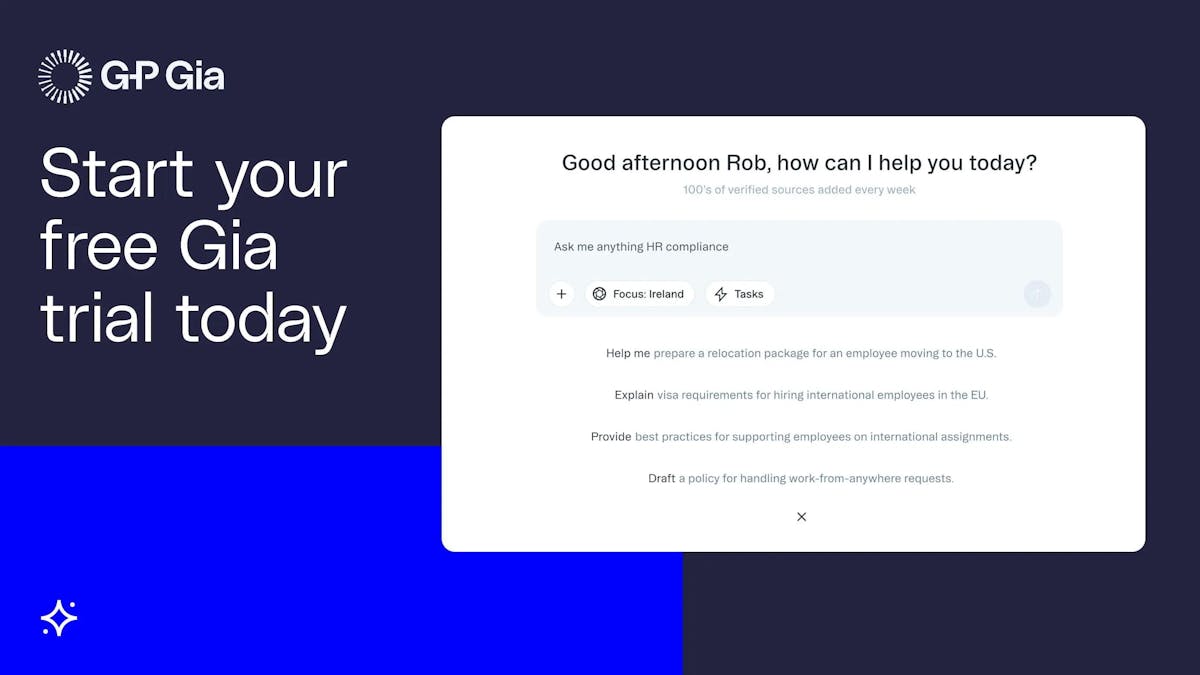
Start with a clear prompt: Log in to Gia and ask it to create your document. Be sure to include specific context, for example: "Draft a code of conduct for a U.S.-based technology company with remote international employees."
-
Upload your mission and vision statement: Use Gia's document upload feature to add your company's mission statement or existing value policies. You can then prompt Gia to integrate that language and tone into the draft, so the output aligns with your brand and guiding principles.
-
Refine the draft: Once Gia provides the initial draft, you can ask for specific changes or clarifications. For example: "Can you add more examples to the code of conduct section on social media?"
-
Localize for your global team: After finalizing your core document, ask Gia to adapt it for other countries where you operate. For instance: "Create a version of this code of conduct that complies with employment laws in the Philippines and translate it into Filipino." Gia will generate a localized and translated version in minutes.
Benefits of using Gia to write a global code of conduct
Gia makes writing a globally compliant code of conduct quick and easy.
1. Generates globally compliant drafts instantly
Gia is built on a proprietary knowledge base of 100,000+ legally vetted sources and 1,500+ government sources. This knowledge base covers employment law in over 50 countries and all 50 U.S. states. You can select your countries of operation, and Gia will generate a localized draft aligned to each jurisdiction's regulations. It can also translate HR documents into 50+ languages.
2. Creates a company knowledge base
Gia allows you to upload your company policies, value statements, or other relevant documents. Gia will then reference these policies when answering your questions or generating related documents (like a code of conduct). With Gia, you can turn your static policy documents into dynamic intelligence.
For example, upload your company's mission statement and code of ethics, and Gia will weave its language into the code of conduct's introduction. The code's tone, language, and content will align with your company culture and values.
3. Gives you compliance insights
Gia uses advanced reasoning to understand the nuances of your questions. You can ask complex, cross-border HR questions, like: "What are the standard reporting processes for a conflict of interest in Germany versus the U.S.?" and receive an accurate answer in seconds. This on-demand expertise helps you solve complex issues fast. With Gia as your agentic AI solution for HR, you get the answers you need right away.
4. Proactively monitors regulatory changes
A new policy compliance monitoring feature will soon be available to Enterprise users. Gia will monitor your company policies against global compliance laws and notify you when relevant updates could impact your business or your code of conduct.

In the meantime, users can ask Gia to review codes of conduct for compliance when needed. Gia uses recent articles and legislative updates to deliver reliable, updated compliance guidance on documents and policies.
Your code of conduct rollout plan
Implementing your code of conduct takes a clear plan. Gia can help you create an internal communications strategy, a list of potential FAQs, and a training plan to help team members apply your employee code of conduct. Follow these steps for a smooth rollout:
-
Get executive endorsement: Begin with a company-wide announcement from leadership. This will show your team that the code has full support and is a priority for the whole company.
-
Develop interactive training: Training modules with real-world scenarios help employees apply the code of conduct in the workplace.
-
Ask for acknowledgment: Ask all employees to acknowledge that they've read, understood, and agreed to the code of conduct. Keep track of their acknowledgment for compliance and accountability.
-
Ensure constant accessibility: Make the code of conduct easy to access at any time. Integrate it into the new hire onboarding process and translate it into the languages your employees speak.
-
Update regularly: Review and update your code of conduct at least annually. Updates should also happen after significant changes in your company or country regulations.
Common code of conduct mistakes to avoid
Avoid these common mistakes when creating and implementing a code of conduct:
-
Being too vague: Ambiguous language makes rules confusing and inconsistent. Use concise yet specific language and give examples.
-
Creating a one-size-fits-all document: Tailor your code of conduct to the specific legal and cultural contexts of each region where you operate.
-
Forgetting a nonretaliation clause: If employees fear punishment for speaking up, they may stay silent. Include a nonretaliation policy that protects employees who report concerns in good faith.
-
Taking a static approach: Develop a process for regularly reviewing and updating your code of conduct to minimize compliance risks.
Build a compliant code of conduct with Gia
Creating a global code of conduct is a high-stakes task. Gia can generate compliant codes of conduct in minutes. Gia is agentic AI backed by G-P global employment expertise and a vast proprietary knowledge base, so you can feel confident in your code.
Try Gia today and create a code of conduct in minutes for your global team.