




6 legal risks for France-based companies hiring globally

There’s no shortcut when it comes to HR compliance. One misstep can lead to hefty fines, legal disputes, and reputational damage. For France-based companies, compliance mistakes can blow initial budget estimates and derail months of careful planning.

Here are six legal risks of global hiring and how to avoid them.

Risk #1: Permanent establishment (PE) triggers

Hiring employees in other countries can accidentally create local tax obligations for France-based companies. This happens when your business activities cross certain thresholds related to physical presence, duration of operations, or nature of work.

Every country sets different thresholds. A single employee is enough to trigger PE in some countries, while others require a more substantial presence. PE introduces requirements like local payroll tax withholding, social security contributions, or even corporate tax liabilities. You may also face retroactive tax assessments and administrative burdens that can be extremely costly.

How an EOR helps: An employer of record (EOR), or portage salarial, becomes the legal employer for your team members in other countries, minimizing permanent establishment risk. 

Under this model, employees are legally employed by the EOR while your France company manages day-to-day assignments and performance. This setup removes the direct employment relationship that typically triggers permanent establishment obligations.

Risk #2: Worker misclassification

The scrutiny regarding disguised employment extends to your international operations. Misclassifying employees as independent contractors in another country is one of the costliest compliance failures for a France-based company.

Each country has its own classification criteria, often considering factors like control over work methods, financial independence, exclusivity of services, and integration into business operations. What’s considered compliant for a contractor in France could be an unlawful practice  in another jurisdiction.

The financial and legal consequences of worker misclassification include retroactive social security contributions, unpaid statutory benefits, unpaid holiday pay, and steep financial penalties. Some countries even impose criminal liability if misclassification is seen as a form of tax evasion or fraud.

How an EOR helps: An EOR eliminates the risk of misclassification by officially employing the worker in the host country from day one. They manage all local employment contracts, payroll, benefits, and compliance requirements, safeguarding your France company from international employment law exposure.

Risk #3: Employment law violations

France's employment protections provide a baseline. But each international market has different legal frameworks. Countries have specific requirements for employment contracts, termination procedures, working hours, and employee rights.

No two markets are the same. Contract requirements vary dramatically. Some countries mandate specific clauses, termination procedures, or probationary periods that differ from standards in France. Working time regulations, overtime calculations, and mandatory leave entitlements are also different around the world. 

Employment law violations often become public through labor disputes, creating lasting employer brand damage that affects recruitment and customer relationships.

How an EOR helps: EORs have deep expertise in local employment laws and handle all compliance matters for you. They create compliant employment contracts, manage working time regulations, calculate overtime correctly, and handle terminations according to local requirements. You get compliance protection without needing to learn each country's employment framework.

Risk #4: Payroll and tax failures

International payroll is a tightrope walk of country-specific requirements and filing deadlines. Late filings can freeze work permits and open the door to government inspections. Countries impose various penalties for late submissions, ranging from percentage-based fines to fixed penalty amounts. Some jurisdictions may deny work permits for noncompliant employers.

Payroll compliance extends beyond calculations to include statutory reporting, social security contributions, and coordination with local tax authorities.

How an EOR helps: EORs handle all payroll processing, tax calculations, and statutory reporting in each country. Whether it’s managing U.S. federal and state payroll taxes, U.K. PAYE and National Insurance, or German Sozialversicherung, an EOR ensures compliance wherever you hire.

Risk #5: Immigration and work authorization oversights

France companies often need to relocate key employees to kick-start operations in a new location. But verifying work authorization is complex when every jurisdiction has different visa and work permit requirements.

Visa sponsorship creates ongoing compliance obligations. You must monitor visa conditions, maintain proper documentation, and ensure sponsored employees comply with work authorization restrictions. Companies must keep up with changing immigration requirements and establish robust verification processes.

How an EOR helps: An EOR can help you understand the employment implications of hiring across borders, including when work authorization is required. For situations involving visas or cross-border work, an EOR can point you to the appropriate legal or immigration resources to ensure employees meet local requirements. 

Risk #6: Data protection violations

France’s data protection laws are among the strictest in the world, governed mainly by the EU General Data Protection Regulation (GDPR) and the French Data Protection Act. Although France companies are used to a high level of regulatory scrutiny, global hiring takes things to a whole new level. There are country-specific data localization requirements and cross-border transfer restrictions to consider.

Many countries prohibit storing employee data outside national borders or require specific security measures for international data transfers. These often conflict with centralized HR systems.

Cross-border data transfer obligations also vary significantly. Some countries require explicit consent. Others demand specific contractual protections. Many impose technical requirements for data security.

Penalties range from administrative fines to criminal liability, and enforcement approaches differ substantially across jurisdictions.

How an EOR helps: EORs have compliant data handling systems in each country, ensuring data localization requirements are met. They handle cross-border data transfer obligations, obtain necessary consents, and have robust security measures. Their systems are designed to comply with both GDPR and local data protection laws simultaneously.

The G-P advantage

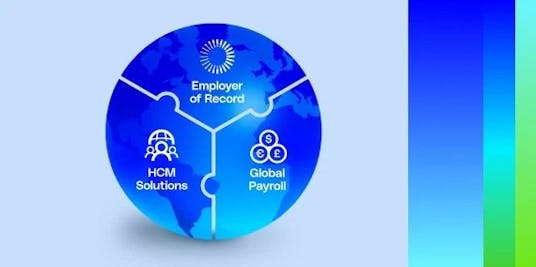
With G-P, you can hire the best person for the job, anywhere in the world. G-P™ global employment products and EOR solutions offer everything you need to hire, onboard, and manage global teams — without setting up new entities. Our dedicated team of regional HR and legal experts has over a decade of experience supporting France companies in their international expansion.

G-P EOR allows you to access international markets without building internal compliance capabilities across multiple jurisdictions. Our built-in Global Compliance Engine (GCE) gives you continuous oversight of changing regulations. 

G-P shields your company from the risks of global employment. Book a demo to see G-P EOR in action.